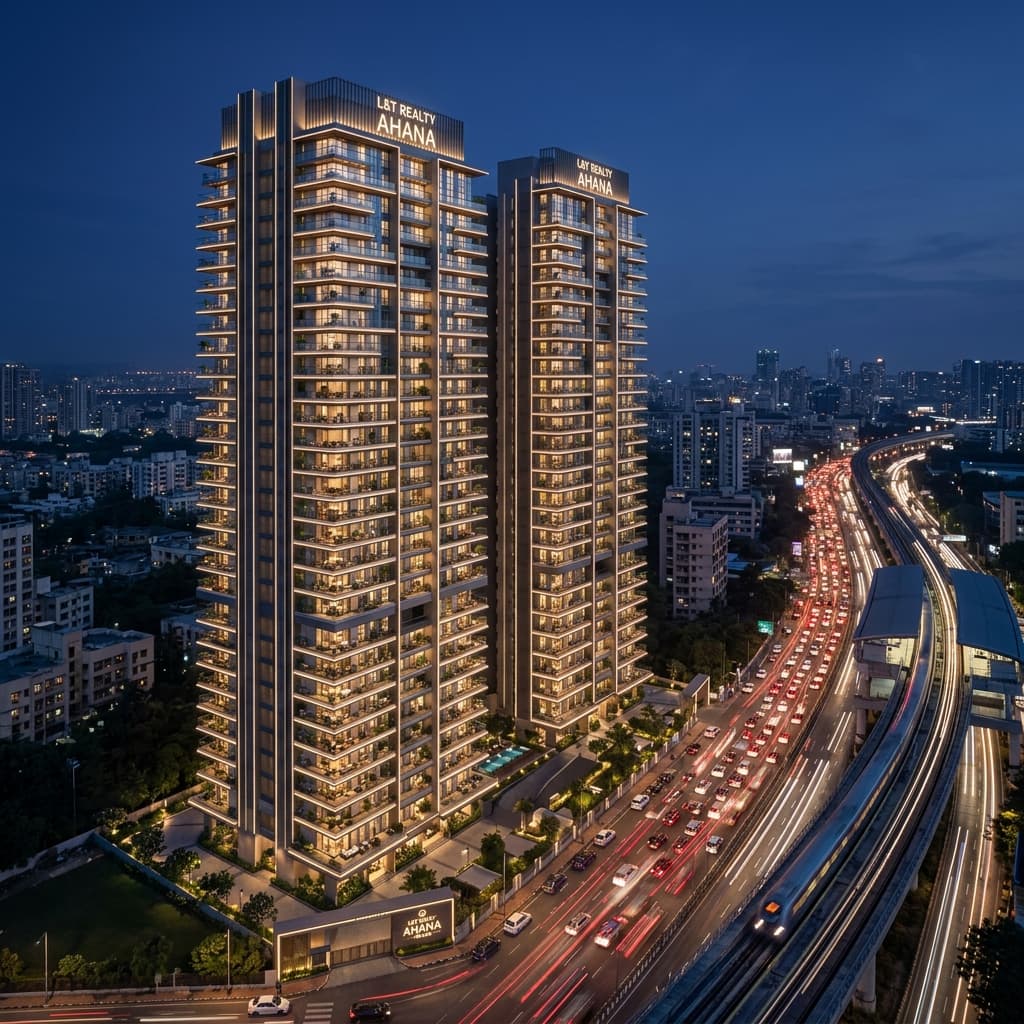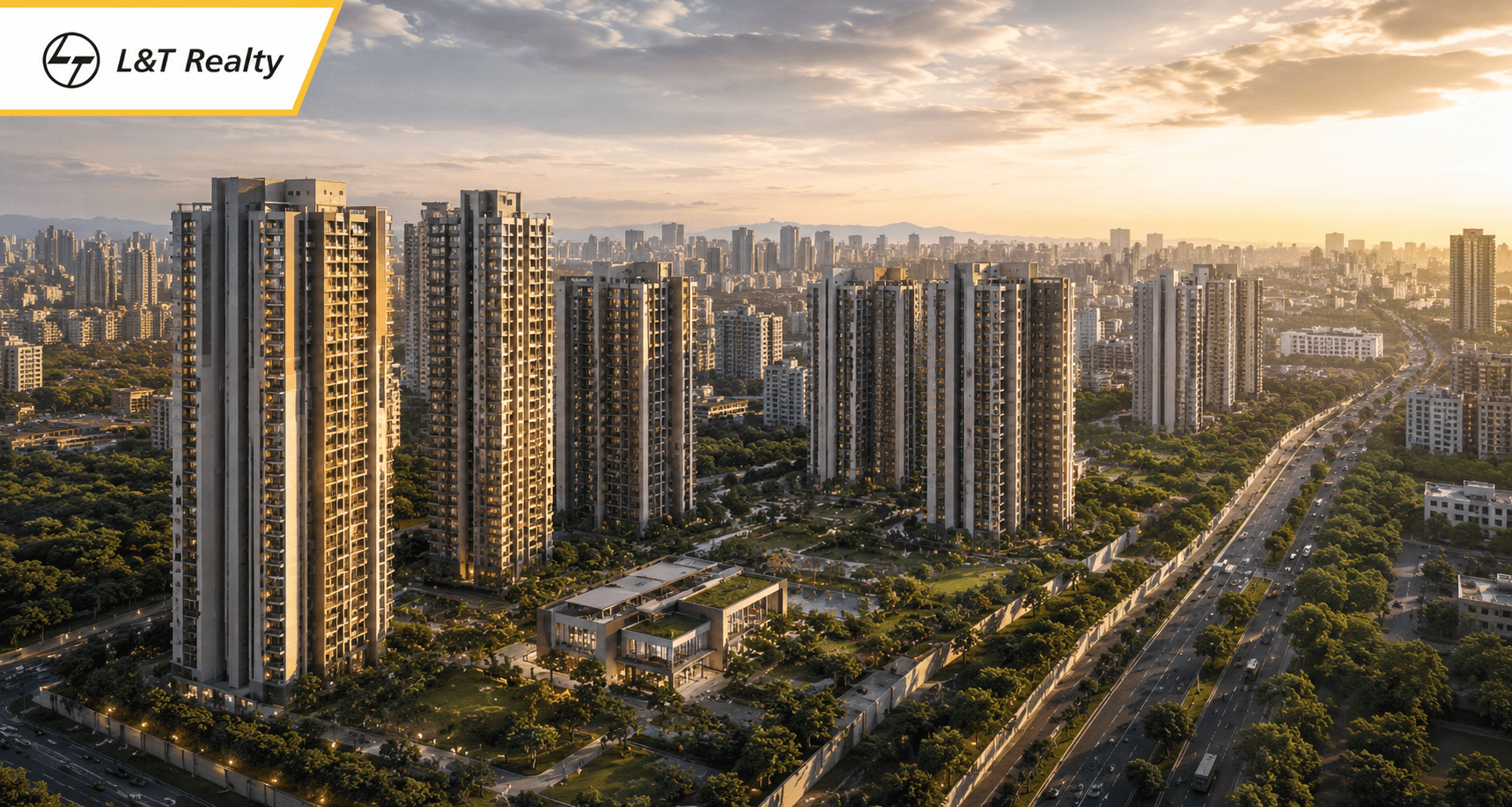
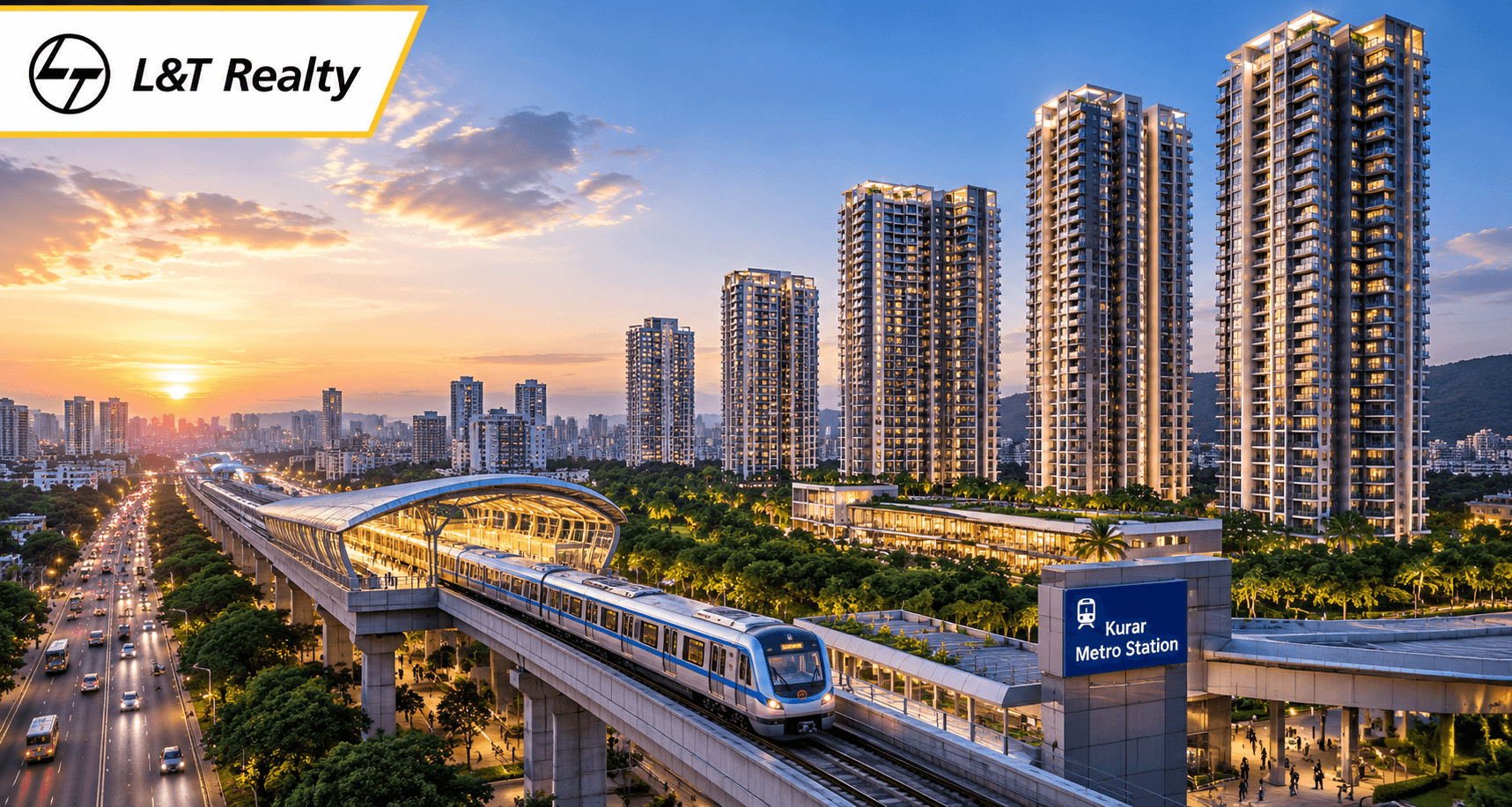
- 01Connectivity and metro growth are reshaping Mumbai's western suburbs, making areas like Malad East more accessible.
- 02Post-pandemic, buyers are demanding practical, spacious homes with good layouts, reducing appeal of older housing stock.
- 03The Kurar metro station (operational since 2022) significantly improves Malad East's east-west connectivity.
- 04The western suburbs, including Malad East, are expected to account for a large majority of new homes from society redevelopment by 2030.
- 05Branded developers wait for proof points like operational metro lines before entering new micro-markets, a trend starting in Malad East.
Ask a Mumbai homebuyer in 2018 where they wanted to live, and the answer usually came fast. Bandra if they could afford it. Andheri if they couldn't. Powai if they worked in IT. Borivali or Kandivali if they were just starting out. The map of desirable Mumbai was, for the most part, settled.
Ask the same question today, and the answer takes longer. People pause. They mention areas they wouldn't have considered five years ago. Malad East comes up more often than it used to—not as a fallback, but as a place people are actively comparing against the old favourites.
This shift didn't happen overnight, and it isn't really about Malad East specifically—at least not at first. It's about what's changed underneath Mumbai's real estate map: where the metro lines actually run now versus where they were promised to run, which neighbourhoods are mid-redevelopment versus which have plateaued, and what a generation of buyers who spent two years working from home decided actually matters in a home.
This piece is an attempt to understand that shift—not to declare Malad East the next big thing, because Mumbai real estate has heard that phrase about a dozen neighbourhoods that didn't quite deliver. Instead, the goal is to look honestly at what's driving buyer interest toward the western suburbs generally, and Malad East specifically, and to separate the structural reasons from the noise.
What Homebuyers Want In 2026
Talk to enough real estate professionals in Mumbai right now and a pattern emerges in how they describe today's buyer. The word that comes up repeatedly is practical. Not in a dismissive sense—practical as in buyers have become considerably harder to impress with the things that used to close a sale.
A few years ago, a striking lobby, an infinity pool render, and a sales pitch about "the next big thing" could carry a project a long way. Buyers are more skeptical of all three now. Industry commentary from 2026 consistently points to a buyer who prioritises layout efficiency, ventilation, storage, and built-in functionality over add-on amenities—someone who wants security, parking, and usable space included in the price rather than upsold separately.
Part of this is simply a maturing market. Buyers today have lived through enough possession delays, enough amenity disappointments, and enough "world-class clubhouse" promises that didn't survive contact with reality. They've recalibrated what they're willing to take on faith.
But part of it is also a genuine shift in what home means after 2020. The pandemic didn't just normalise remote and hybrid work—it permanently changed what people expect a home to do for them. A home office that's actually usable. A balcony that gets sunlight. Enough space that everyone in the household isn't on top of each other during a video call. These aren't luxury requests anymore. They're baseline expectations, and they quietly eliminate a lot of older Mumbai housing stock from consideration—the cramped layouts, the windowless second bedrooms, the buildings where natural light was an afterthought.
This recalibration matters for where people look, because it changes the calculus on location. If a flat in an "established" area gives you 650 sq ft of awkward layout for the same price as 850 sq ft of well-planned space 20 minutes further out—and that 20 minutes has gotten meaningfully shorter because of a metro line that didn't exist a few years ago—the established area starts to look less like the obvious choice and more like one option among several.
Why Connectivity Is Becoming More Important Than Ever
Connectivity has always mattered in Mumbai—this is a city defined by its commute. But the way it matters has changed, and that change explains a lot of what's happening at the neighbourhood level.
For most of Mumbai's modern history, connectivity meant proximity to the suburban rail network—the Western, Central, and Harbour lines that have carried the city's workforce for over a century. Neighbourhoods built their reputations around their stations: Bandra, Andheri, Borivali. If you weren't within a reasonable walk or rickshaw ride of a railway station, you were, in a meaningful sense, off the map for a large segment of buyers.
What's changed is that this is no longer the only axis. Mumbai now has an expanding metro network that runs roughly perpendicular to the old suburban rail lines in several places, opening up east-west connections that simply didn't exist before. And the Mumbai Trans Harbour Link and Coastal Road have done something similar for areas that were previously considered geographically isolated despite being relatively close to the city centre as the crow flies.
> Market Data: The operational success of large infrastructure projects like the Mumbai Coastal Road and the Trans Harbour Link has triggered price movement in pockets of the city that were previously considered disconnected—narrowing the valuation gap between the island city and extended suburbs that has defined Mumbai real estate for decades.
The practical effect of this is that "connectivity" is no longer a single yes/no question about whether you're near a railway station. It's become a more layered question: are you near a railway station, a metro station, a highway, or—increasingly—more than one of these? And for a growing number of buyers, a location that offers metro access to a commercial hub matters more than a location that's simply "central" on a map but requires two changes and an auto rickshaw to get anywhere.
This is the lens through which a lot of western suburb activity needs to be understood. The areas seeing the most buyer interest right now tend to be the ones where this layered connectivity has recently become real—not promised, not "coming soon," but operational.
How Metro Expansion Is Reshaping Mumbai Real Estate
It's worth being specific here, because "metro expansion" has been a talking point in Mumbai real estate marketing for so long that it's lost some of its meaning. Plenty of projects have been sold on the promise of a metro line that was, at the time, still a line on a planning document.
What's different about the current moment is that several of these lines have actually opened. Mumbai Metro's Red Line—running from Dahisar in the north down through Malad, Goregaon, Jogeshwari, and into Andheri East—has been operational in its core stretch since 2022, with extensions continuing to open in the years since. As recently as April 2026, a further extension pushed the line northward into Mira-Bhayandar, turning what was previously an endpoint into a through-station and interchange.
> Market Data: Mumbai Metro Line 7 (Red Line) connects Dahisar East to Andheri East across 13 stations over roughly 16.5 km, running through Malad, Goregaon, and Jogeshwari. In April 2026, Line 9's first phase extended Red Line service further north into Mira-Bhayandar, creating a new three-line interchange at Dahisar East.
Why does this matter beyond the obvious convenience? Because a metro line that connects you to Andheri East—home to a large concentration of corporate offices, BPOs, and the SEEPZ special economic zone—does something that the suburban railway alone couldn't always do efficiently: it creates a direct, repeatable, time-predictable commute between residential neighbourhoods along the line and one of Mumbai's largest employment clusters, without requiring a change of mode.
There's also a second-order effect that tends to get less attention: a line that opened a few years ago has had time to become "normal." Early metro adopters are often sceptical—ridership builds slowly, and property markets are sometimes slow to price in connectivity that feels new or unproven. By the time a line has been running for three or four years, with extensions opening on either end, the connectivity has stopped being a pitch and started being a fact of daily life for thousands of commuters. That's typically when property markets along the line start to reprice more decisively—not at the announcement, and often not even at the opening, but once the line has proven itself.
This timing question is part of why certain western suburb neighbourhoods are getting more attention now rather than, say, in 2022 when these metro lines first opened. The infrastructure has had time to mature. The scepticism has had time to fade. And the neighbourhoods along these lines that also happen to have other things going for them—established social infrastructure, highway access, room for new residential supply—are the ones where buyer interest is concentrating.
The Transformation Of Malad East
Malad East is a useful case study precisely because it isn't a brand new name. This isn't a neighbourhood that didn't exist on Mumbai's residential map a decade ago and has suddenly appeared from nowhere. Malad—east and west—has been a recognised, reasonably affordable residential area for a long time, known mostly for its suburban rail access and its position on the Western Express Highway corridor.
What's changed is less about Malad East becoming something new, and more about several existing and ongoing developments converging at the same time.
An Operational Metro Station Where There Wasn't One
The most concrete change is the Kurar metro station on Red Line 7, sitting close to several residential pockets in Malad East. This station has been operational since 2022, which means Malad East residents have had direct metro access to Goregaon, Jogeshwari, and Andheri East for several years now—and, following the 2026 extension, indirect access further north into the Mira-Bhayandar corridor via the Dahisar East interchange.
For a neighbourhood whose previous connectivity story was largely "Malad railway station on the Western Line, plus the Western Express Highway," adding a perpendicular metro connection that opens up the Andheri East employment corridor is a meaningful structural change—not a promise, but something that's been functioning for years now.
Redevelopment Activity in the Surrounding Belt
Malad East doesn't exist in isolation—it sits within a broader western suburbs corridor that real estate analysts have specifically flagged as the centre of Mumbai's redevelopment activity. Industry estimates suggest the western suburbs—stretching from Santacruz through Andheri, Goregaon, Kandivali, and Dahisar—will account for the large majority of new homes expected from society redevelopment projects across Mumbai through the rest of this decade.
> Market Data: According to Knight Frank India estimates cited in 2025, the western suburbs are projected to contribute around 32,354 of the roughly 44,000 new homes expected from society redevelopment across Mumbai by 2030—approximately 73% of the total. This places neighbourhoods across this corridor, including those adjacent to Malad East, at the centre of the city's primary supply story for the coming years.
This matters for Malad East in two ways. First, redevelopment in the surrounding belt tends to bring infrastructure upgrades that benefit neighbouring areas too—better roads, improved drainage, upgraded utilities aren't always confined neatly within a single project's boundary. Second, and more directly, it signals that developers—including larger, more established names—are actively looking at this corridor as a place to build, which brings us to one of the more recent developments in Malad East specifically.
New, Larger-Format Residential Development
Historically, a meaningful share of Malad East's residential stock has consisted of older, mid-rise buildings—practical, often dated, generally affordable. What's newer is the appearance of larger-format, high-rise residential developments in the area, including projects positioned at a noticeably higher price point than what Malad East was previously known for.
This kind of shift—where a neighbourhood that was known for one price segment starts seeing development at a meaningfully higher segment—tends to happen when a few things align: land becomes available (often through redevelopment or consolidation), connectivity improves enough to support higher price points, and at least one credible project demonstrates that the market will absorb that pricing. Once that demonstration happens, it tends to attract more of the same—both from buyers willing to pay the new price point, and from other developers who read the first project as validation.
Infrastructure, Employment & Lifestyle Advantages
Connectivity gets buyers' attention, but it's the supporting infrastructure that determines whether they stay interested once they've actually visited. Malad East's profile here is worth examining honestly—it has genuine strengths, and they're not new strengths invented for a marketing brochure.
Employment Access
Malad East sits within reasonable reach of several of Mumbai's significant employment clusters without being directly inside any of them—which is itself a kind of advantage. Goregaon East, just south, has a substantial concentration of corporate offices and business parks. Further south, Andheri East—now metro-accessible via Red Line 7—houses SEEPZ and a large IT and BPO employment base. The Western Express Highway provides a direct, if traffic-dependent, route toward Bandra-Kurla Complex for those working in financial services.
None of these are a five-minute walk. But all of them are within a single-mode commute that has gotten shorter with the metro's arrival—and for a workforce that, post-pandemic, is often commuting two or three days a week rather than five, a 25-30 minute commute that used to feel like a dealbreaker has become considerably more tolerable.
Established Social Infrastructure
This is where Malad East differs from a lot of "emerging" locations that get talked about in the same breath. Areas that are genuinely new to the residential map often come with a real cost: schools, hospitals, and retail haven't caught up yet, and early residents spend years driving long distances for things that should be local.
Malad East doesn't have this problem. It's an established residential area with schools, hospitals, and retail that have been serving residents for years—not infrastructure built in anticipation of future residents, but infrastructure that already works because people already live here. International and CBSE-affiliated schools, multi-specialty hospitals, and established retail including a large mall are part of the existing fabric, not a future promise.
An Underrated Lifestyle Asset
One detail that doesn't come up often enough in conversations about Malad East: its proximity to Sanjay Gandhi National Park, one of the largest urban green spaces in any major Indian city. For a city where green space is genuinely scarce and where most residential areas offer little beyond a society garden, having a large forest and lake area within a short drive is a quality-of-life factor that's easy to overlook until you've experienced the alternative.
The Highway Factor
The Western Express Highway running alongside Malad East isn't a new feature—it's been there for decades. But its value has arguably increased as the road itself has been progressively improved and as it increasingly functions as a release valve when local roads or rail services are disrupted. Having a direct highway on-ramp is the kind of advantage that doesn't show up in a brochure's amenity list but matters every single day.
Why Branded Developers Are Entering Emerging Micro-Markets
There's a recognisable pattern in how Indian real estate markets evolve, and it has less to do with any individual neighbourhood and more to do with how large developers think about risk and timing.
Large, branded developers—the kind with national reputations and balance sheets that can absorb multi-year construction timelines—generally don't want to be first into a neighbourhood. Being first means betting on infrastructure that hasn't been proven, absorbing the cost of educating the market about why this location makes sense, and accepting slower initial sales velocity while the area builds a track record.
What these developers tend to do instead is wait for the proof points—an operational metro line, a demonstrated willingness from buyers to pay above the area's historical price ceiling, visible redevelopment activity in the surrounding belt—and then enter once those proof points exist but before the area has fully repriced to reflect them. This is, in effect, the developer-scale version of the same calculation individual buyers are making: get in after the uncertainty has reduced, but before the premium has been fully priced in.
Malad East appears to be at roughly this stage. Several early project listings suggest that at least one large, nationally recognised developer has been active in land acquisition and project planning in the Koknipada area of Malad East, off the Western Express Highway and near the Kurar metro station. Initial reports indicate a residential development involving multiple high-rise towers with a range of apartment configurations, though official details—including formal project registration, final pricing, and confirmed specifications—are still awaited as of mid-2026.
It would be premature, and frankly irresponsible, to treat unconfirmed project details as settled fact. But the pattern itself—a recognised developer reportedly active in a location that has recently gained metro access and sits within an active redevelopment corridor—is consistent with how this kind of market transition typically unfolds. Whether or not this specific project proceeds exactly as currently reported, the underlying signal is the same: at least one large developer's assessment appears to align with the connectivity and infrastructure case for the area.
For readers tracking which established developers are active across Mumbai's growth corridors: Explore L&T Realty Developments
L&T Realty—the real estate arm of Larsen & Toubro—has an established track record across Mumbai (including Powai and Seawoods), Hyderabad, Ahmedabad, and Bangalore, and is among the developers whose presence in a micro-market is often read by other industry participants as a signal worth noting. As with any reported but not yet officially confirmed project activity, readers should treat specific details cautiously until formal registration and project information is published.
To review L&T Realty's broader portfolio and track record across markets: L&T Realty Projects
What Buyers Should Verify Before Choosing Any New Launch Project
None of the structural shifts discussed above change one basic rule of buying property in Mumbai, or anywhere in India: the quality of the location story does not substitute for due diligence on the specific project. A genuinely well-located project from a credible developer can still be a poor choice if the specific unit, pricing, or paperwork doesn't hold up. Here's what matters regardless of how compelling the neighbourhood narrative is.
RERA Registration — Non-Negotiable
Every residential project of meaningful scale in Maharashtra must be registered with MahaRERA before sales activity legally begins. Before engaging seriously with any new launch—in Malad East or anywhere else—search the project name on the MahaRERA portal (maharera.mahaonline.gov.in) and confirm the registration status is "Valid," not pending, lapsed, or absent.
Carpet Area, Not Marketing Area
Under RERA, pricing must be quoted on carpet area—the actual usable space inside your walls. Listing sites and early marketing materials sometimes use broader area definitions that inflate the apparent size. Always ask for the RERA carpet area figure specifically, and calculate your price-per-square-foot on that basis when comparing projects.
Verify the Connectivity Claims Yourself
"Near the metro" can mean anything from a two-minute walk to a twenty-minute auto ride depending on who's saying it. If metro proximity is part of a project's appeal—and for Malad East projects, it likely will be—walk the actual route from the project gate to the station entrance yourself, or have someone do it for you, ideally during a normal commuting hour.
Builder Track Record on Timelines
A credible developer name is a positive signal, but it isn't a guarantee on any individual project's timeline. Check the developer's history of possession dates versus actual delivery across their completed projects on the MahaRERA portal. A consistent pattern of delays is relevant information regardless of how strong the brand name is.
Total Cost, Not Headline Price
Stamp duty, registration charges, GST on under-construction properties, parking costs, and society formation charges typically add a meaningful percentage on top of the quoted base price. Request a complete cost breakdown before treating any headline price as the number you're actually working with.
Site Visit, Not Just Site Plan
Renders and master plans show the project as designed. They don't show you what's immediately outside the boundary wall, what the approach road looks like during monsoon, or how the location actually feels at 9 AM on a weekday. For a location whose appeal rests partly on connectivity and surrounding infrastructure, experiencing that infrastructure in person is part of the due diligence, not an optional extra.
Could Malad East Be One Of Mumbai's Most Important Growth Corridors?
It's worth resisting the temptation to answer this question with more certainty than the evidence supports. Mumbai real estate has a long history of neighbourhoods being declared "the next big thing" based on a single piece of infrastructure news, only for the actual transformation to take far longer—or look quite different—than the initial framing suggested.
What can be said with more confidence is that Malad East currently sits at an intersection of several trends that, individually, are well-documented across Mumbai's western suburbs: an operational metro connection that has had years to mature rather than being newly announced; a position within the broader western suburbs corridor that industry analysts have specifically identified as the centre of the city's redevelopment activity through 2030; established social infrastructure that doesn't need to be built from scratch; and early signs of developer interest at a higher price point than the area's historical norm.
Whether this adds up to Malad East becoming "one of Mumbai's most important growth corridors" is, honestly, a bigger claim than the current evidence justifies—that kind of designation tends to be applied retrospectively, once a multi-year trajectory is visible, not predicted confidently in advance. What's more defensible is a narrower observation: Malad East currently has more of the structural ingredients that have driven repricing in other Mumbai neighbourhoods than it did five years ago, and fewer of the open questions that usually accompany genuinely speculative locations.
For buyers, that distinction matters. It's the difference between a location worth seriously evaluating on its current merits—connectivity, infrastructure, livability, and yes, price relative to comparable areas—and a location worth buying purely on a growth story. Malad East, on the evidence available in mid-2026, looks more like the former than the latter. That's a more modest claim than "next big thing," but it's also one that's likely to hold up better over time.
Editor's Note: This article reflects market analysis as of June 2026 based on publicly available infrastructure data, industry commentary, and reported (not officially confirmed) project activity. Readers should verify current status of any specific project through official RERA channels before making decisions.
Conclusion
The market shift toward Malad East is logical when viewed through the lens of changing buyer priorities and delivered infrastructure. As Mumbai continues to expand and re-centre along its new metro lines, neighbourhoods that combine connectivity, existing social infrastructure, and redevelopment potential will continue to draw attention. Malad East is currently at the forefront of this transition.
Published by TSS Global | tssglobal.in | Mumbai & Pune Real Estate Advisory | June 2026
Frequently Asked Questions
A combination of factors: an operational metro connection (Kurar station on Red Line 7) that has been functioning since 2022 and connects the area to Goregaon and Andheri East; Malad East's position within the broader western suburbs corridor that's central to Mumbai's redevelopment activity through 2030; established social infrastructure including schools, hospitals, and retail; and early signs of higher-price-point residential development entering the area.
Yes. Malad East sits within Mumbai's western suburbs corridor, between Goregaon and Kandivali, along the Western Express Highway and the Western Railway line.
Mumbai Metro Red Line 7, which has Kurar station near Malad East, has been operational since 2022 and connects the area to Goregaon, Jogeshwari, and Andheri East—a major employment corridor. A 2026 extension further connected the line northward into Mira-Bhayandar via an interchange at Dahisar East, adding to the network's overall reach.
Malad East sits within the western suburbs corridor—stretching from Santacruz through Andheri, Goregaon, Kandivali, and Dahisar—that industry estimates identify as accounting for roughly 73% of Mumbai's expected society redevelopment supply through 2030. While not every redevelopment project is in Malad East itself, the broader corridor's redevelopment momentum tends to bring infrastructure improvements that benefit neighbouring areas.
Several early project listings suggest a large, nationally recognised developer has been active in land acquisition and planning in the Koknipada area of Malad East. Official details, including formal RERA registration and confirmed pricing, are still awaited as of mid-2026, so specific claims should be treated cautiously pending official confirmation.
Goregaon East's business parks are nearby to the south. Andheri East—home to SEEPZ and a large IT/BPO employment base—is accessible via Red Line 7 metro. The Western Express Highway provides a route toward Bandra-Kurla Complex for those in financial services, traffic permitting.
Yes, in a specific and measurable way: the addition of an operational metro line (Red Line 7, since 2022) created a new east-west style connection to Goregaon and Andheri East that complements the area's existing Western Railway and Western Express Highway access—connectivity options that didn't exist in this combination a decade ago.
Malad East has established schools (including international and CBSE-affiliated options), multi-specialty hospitals, and retail infrastructure including a large mall—all part of the area's existing fabric rather than future additions. It's also near Sanjay Gandhi National Park, a significant green space.
Bandra and Powai remain more established, higher-priced markets with longer track records and, in Bandra's case, a degree of locational scarcity that's difficult to replicate. Malad East offers a different proposition: established (not speculative) infrastructure at a price point that, as of mid-2026, sits below these more mature markets, with connectivity that has improved meaningfully in recent years.
Confirm RERA registration status on the MahaRERA portal, verify carpet area (not marketing area) for accurate price-per-square-foot comparisons, independently check metro distance and walking time, review the developer's track record on possession timelines for past projects, and calculate the total cost including stamp duty, registration, GST, and other charges—not just the headline price.
Malad East's combination of established infrastructure, improved connectivity, and proximity to employment corridors are factors NRI investors typically weigh favourably. As with any location, NRI buyers should additionally verify FEMA-compliant payment processes (NRE/NRO accounts), confirm rental demand patterns for the specific micro-location, and engage a local property lawyer for documentation review—all before any project-specific commitment.
A metro station provides a mode of transport that's largely independent of road traffic, which has become increasingly valuable as buyers—especially those with hybrid work schedules—prioritise commute predictability over raw distance. Properties within comfortable walking distance of operational (not proposed) metro stations have generally seen stronger and more sustained buyer interest across Mumbai's suburbs.
This article does not make price predictions, as future price movements depend on multiple factors including broader market conditions, project-specific outcomes, and the pace of infrastructure delivery. What can be observed is that Malad East currently has more of the structural factors—operational connectivity, established infrastructure, redevelopment-corridor positioning, and reported developer interest—that have correlated with repricing in other Mumbai neighbourhoods, compared to its profile five years ago.
Kurar metro station, on Mumbai Metro Red Line 7, has been operational since April 2022—making it an established part of daily commuting infrastructure for the area rather than a recent or proposed addition.
The main risks mirror those of any property purchase: unverified project claims, pricing inconsistencies on early listings, and the gap between marketing materials and RERA-registered specifications. Malad East's specific advantage is that, unlike genuinely new or peripheral locations, its core infrastructure—schools, hospitals, retail, transport—is already established and functioning, which reduces (though doesn't eliminate) one category of risk that's common in truly speculative areas.