- 01Suburbs with the right underlying fundamentals experience a compounded effect when metro connectivity arrives.
- 02Metro connectivity compresses effective distance, reduces commute risk, expands the tenant pool, and signals institutional confidence.
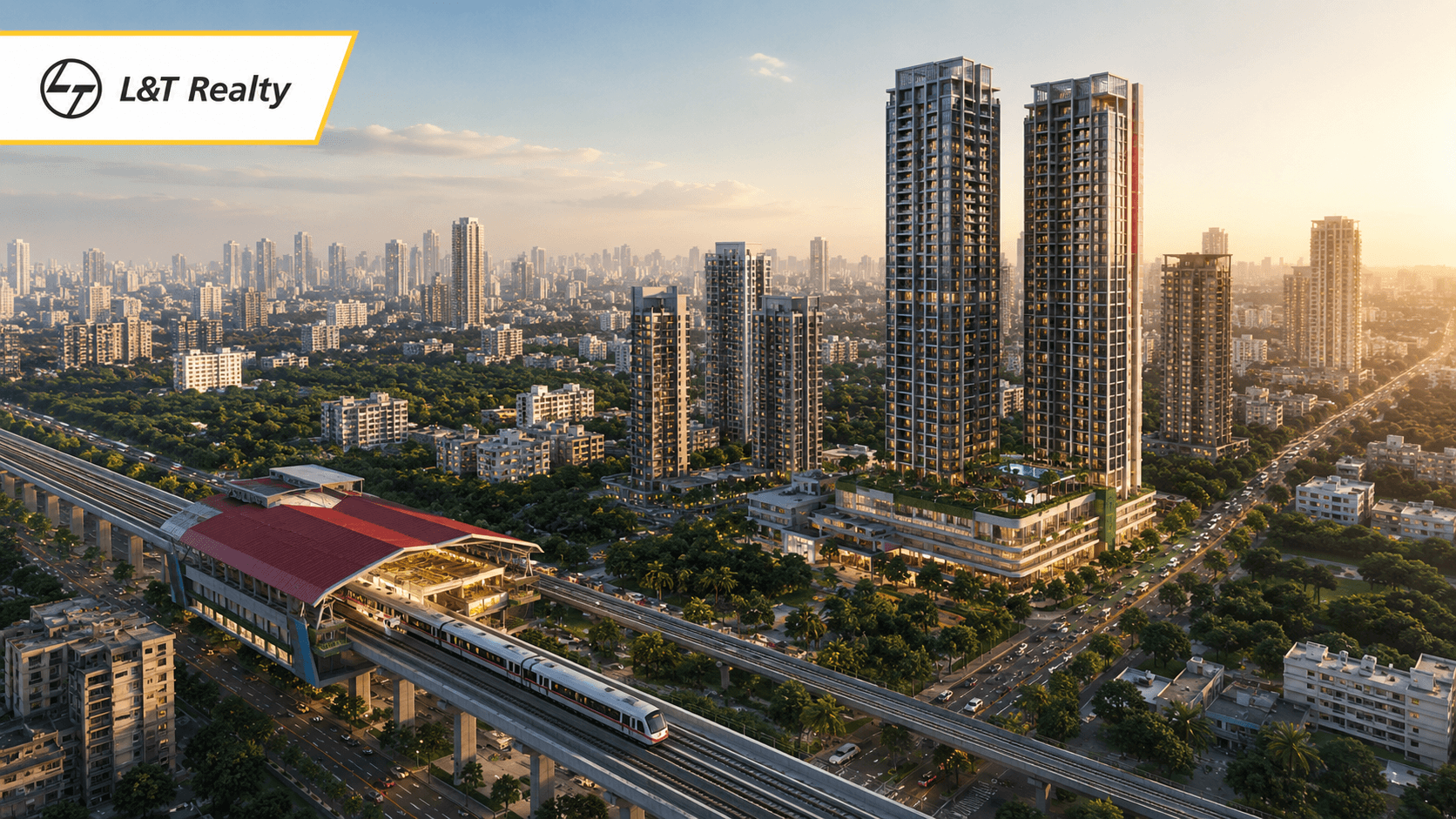
- 03Kurar Station sits within an established residential belt, making it a genuine daily-use node.
- 04Properties within approximately 500 metres walking distance of a metro station command a measurable price premium.
- 05Developers are looking at Malad East due to available land, the metro repricing effect, and aspirational demand.
In the summer of 2006, a quiet residential suburb in east Mumbai called Ghatkopar wasn't particularly on anyone's investment radar.
It was serviceable—connected by the Central Railway line, reasonably priced, with a growing Gujarati business community—but it sat several tiers below the fashionable address conversation happening in Bandra, Andheri, and Powai.
Then Metro Line 1 arrived.
The Versova-Andheri-Ghatkopar corridor opened in June 2014, and what followed is one of the most studied infrastructure-driven price appreciation stories in Indian real estate. Property values in the walkable catchment of Ghatkopar metro station appreciated by 25–35% in the three years following the metro's operationalisation. Rental demand intensified. New-launch projects within the 500-metre metro radius commanded premiums that older buildings simply couldn't compete with. Developers who had quietly acquired land in the area before the metro opened found themselves sitting on assets that had appreciated before they even broke ground.
The lesson from Ghatkopar isn't that metro stations automatically make every nearby property valuable. The lesson is more specific: suburbs with the right underlying fundamentals—employment proximity, an existing residential base, available land for redevelopment—experience a compounded effect when metro connectivity arrives. The infrastructure doesn't create the opportunity. It crystallises it.
Which brings us to Malad East in 2026, and to Kurar Metro Station.
Why Metro Connectivity Changes Real Estate Markets
Before we look at Malad East specifically, it's worth understanding the mechanism—because the property appreciation associated with metro infrastructure isn't arbitrary or automatic.
Metro connectivity does four things to a residential micro-market simultaneously, and the combined effect is larger than any one factor alone.
It compresses effective distance. Thirty minutes by road in peak Mumbai traffic versus eight minutes by metro to the same destination—same geographical distance, entirely different commuting experience. Metro connectivity doesn't move suburbs closer to employment. It makes them feel closer. And in property markets, perception of commute time is a primary driver of residential demand and pricing.
It reduces commute risk. Road commuting in Mumbai is subject to traffic variability that can turn a thirty-minute journey into ninety minutes on a bad day. The metro isn't immune to delays, but its variance is significantly lower than road. For buyers making a twenty-year mortgage commitment, the predictability of a metro commute factors directly into their willingness to pay a location premium.
It expands the tenant pool. Rental demand in Mumbai's residential market is substantially driven by professionals who prioritise commute efficiency. A property accessible by metro attracts a broader, higher-quality tenant pool than one reliant only on road or rail. That expanded demand translates to lower vacancy periods and—typically—higher achievable rents over time.
It signals institutional confidence in the location. Government infrastructure investment of the scale required for a metro line is preceded by years of demographic and economic analysis. When a metro station is built in a suburb, it's because planners have assessed the area's population density, employment proximity, and growth trajectory. That assessment is a form of independent validation that informed buyers and developers read carefully.
These four factors, operating simultaneously, are what drove Ghatkopar's transformation. They're the same factors now activating around Kurar Metro Station in Malad East.
Understanding Kurar Metro Station and Its Strategic Importance
Mumbai Metro Line 7—the Red Line—runs 16.5 km from Dahisar East to Andheri East, with fourteen stations. It's part of Mumbai's expanding metro network that connects, through interchange stations, to Line 2A and Line 1—giving riders access from the northern suburbs to Andheri, Jogeshwari, and the broader western corridor.
Kurar Station sits within Malad East, on a corridor that was previously underserved by rapid transit infrastructure. Malad East had the Western Railway—the Malad station on the Churchgate-Virar line—but the Western Railway in peak hours is one of the most congested commuter rail systems in the world. It moves enormous volumes of passengers, but it does so at considerable personal cost in comfort, time reliability, and daily stress.
Metro Line 7 provides an alternative: less crowded carriages, air-conditioned travel, and a different catchment—specifically connecting Malad East toward Andheri East, where Line 1 interchange and significant commercial space exist. This distinction matters. The Line 7 corridor effectively makes Malad East a direct metro commute away from one of Mumbai's primary business and transit hubs.
The strategic importance of Kurar Station within this network is its position in the Malad East residential belt. It's not a peripheral terminus—it sits within an established suburb, making it a genuine daily-use node rather than just a transfer point.
The 500-metre premium: Research across Mumbai's completed metro lines consistently shows that properties within approximately 500 metres walking distance of a metro station command a measurable price premium over comparable properties beyond that radius. As of 2026, that premium is still building around Kurar—meaning buyers who acquire now are entering before the full repricing rather than after it.
How Malad East Has Evolved Over the Last Decade
Understanding where Malad East is going requires understanding where it has come from.
A decade ago, the suburb's residential narrative was dominated by older mid-market housing stock—buildings from the 1980s and 1990s that served the suburb's original workforce but offered none of the amenities that a new generation of professional buyers expected. The commercial picture was different. Inorbit Mall had established Malad as a retail destination. The WEH provided road connectivity that made Malad East viable for professionals working in the Andheri-Goregaon office corridor.
What was missing was premium residential supply to match the improving commercial and infrastructure picture. Mid-market developers filled the gap, but the supply they provided didn't satisfy the aspirations of the professionals who were actually living and working in the area.
That mismatch—between the quality of the professional population moving into Malad East and the quality of residential supply available—is the structural opportunity that premium developers are now recognising.
The decade-long arc from 2015 to 2025 tells a story of gradual but consistent improvement: the widened WEH, Metro Line 7, improved healthcare facilities, better school access with institutions like Oberoi International School nearby, and steady commercial growth in the Malad-Goregaon belt. Each improvement incrementally narrowed the gap between Malad East's fundamentals and those of more expensive neighbouring suburbs.
In 2026, that narrowing is visible in property prices. Malad East premium apartments command prices that would have seemed aspirational five years ago. But they still sit below comparable product in Goregaon East and significantly below Andheri East—which is precisely the gap that indicates further appreciation runway remains.
Why Developers Are Increasingly Looking at Malad East
Land acquisition strategy in Mumbai real estate is a leading indicator of where the market is heading. Developers typically acquire land 3–5 years before launching a project—which means current developer activity signals the expected premium positioning of a micro-market years from now.
The developer conversation around Malad East has intensified for three interconnected reasons.
Available land at viable scale. Andheri East is largely consumed. Goregaon East is near saturation for large-footprint residential development. Malad East still has meaningful redevelopment opportunities—older residential properties on parcels large enough to support tower-format premium developments. For a developer who wants to build at a scale that justifies a full amenity package and a premium launch, Malad East currently has options that don't exist further south.
The metro repricing effect. Developers understand the metro premium calculation better than most buyers. They acquire land in metro-adjacent locations knowing the full price premium hasn't yet been realised and that the gap between current and future pricing creates project viability.
The aspirational demand signal. Professional buyers in Malad East have been waiting for premium product in their own suburb rather than being forced to look at Goregaon East or commute from further north. This suppressed demand is legible to developers who track enquiry data and broker feedback.
The result of these three factors: Malad East is now on the active acquisition radar of developers who weren't considering it five years ago.
The Role of Redevelopment in Malad East's Growth Story
One factor that distinguishes Malad East from some other Mumbai suburbs is the scale of redevelopment opportunity.
Mumbai's residential market has two development models: greenfield construction on undeveloped land and redevelopment of existing older buildings. In Malad East, where the built environment is decades old, redevelopment is the more relevant model. Older buildings covered by Maharashtra's redevelopment regulations represent opportunities to replace outdated stock with premium new construction.
Redevelopment benefits the suburb in multiple ways simultaneously. It replaces deteriorating buildings with modern construction. It increases residential supply in an area where greenfield land is constrained. It raises the quality standard of the built environment. And it generates supply that newer-generation buyers will actually consider, whereas the buildings being replaced were often invisible to that buyer profile.
The arrival of premium developers—bringing brand association and quality commitment—accelerates this process. When a developer of national standing commits to a Malad East project, it signals to the redevelopment market that the suburb's premium ceiling is being raised, encouraging further activity.
How Homebuyers Evaluate Metro-Connected Locations
The way buyers research metro-adjacent property has evolved considerably.
A decade ago, metro proximity was a secondary consideration—noted positively but not heavily prioritised. Today, among the core buyer demographic for premium Mumbai apartments—IT professionals, finance sector employees, dual-income couples—metro proximity has moved from secondary to primary.
The shift is generational as much as infrastructural. Buyers in their late twenties and thirties in Mumbai have, in many cases, never owned a car. They navigate by Uber, metro, and occasionally Western Railway. For this buyer, proximity to a metro station isn't an amenity—it's a functional requirement.
This shift has direct implications for valuation. When the majority of the active buyer pool for premium apartments prioritises metro access, the premium commanded by metro-adjacent properties isn't a passing trend—it's structural.
In Malad East specifically, buyers now evaluate properties against a mental map centred on metro station proximity. "Is it walkable from Kurar?" has become as common in broker conversations as "how far is the school?" was a decade ago.
For investors, this buyer preference shift has a straightforward implication: properties satisfying the metro proximity requirement will continue to generate better rental demand and command better resale premiums for as long as metro-first buyers dominate the market.
What Investors Are Watching Closely
The investment thesis for Malad East in 2026 has multiple components, weighted differently by different investor profiles.
The appreciation play: Investors with a 5–7 year horizon are buying the infrastructure gap narrative. Malad East is priced below its fundamentals relative to comparable metro-adjacent suburbs. As the metro fully reprices the area—a process that typically takes 5–8 years after a line opens—the gap with Goregaon East and Andheri East should compress. Entry before that compression is where the appreciation is captured.
The rental yield play: At current Malad East pricing for premium apartments, gross rental yields are running approximately 3–4% for quality gated community product. Premium 2 BHK units in metro-proximate developments command ₹35,000–₹55,000 monthly depending on furnishing and floor. For NRI investors and yield-focused buyers, this offers reasonable current income alongside the appreciation case.
The developer signal: Informed investors track developer land acquisition as a leading indicator. When a developer with national premium positioning enters a micro-market, it's institutional validation of the location thesis—the developer has completed land due diligence, market feasibility analysis, and pricing viability assessment independently.
The NRI angle: Mumbai residential property remains one of the most consistent asset classes for NRI investment. Metro-connected suburban locations with premium new supply address the NRI buyer's primary concerns: tenant-ability, capital protection, and professional building management. Malad East, with Kurar metro connectivity and an emerging premium supply pipeline, is increasingly appearing in NRI investment conversations.
Projects Generating Attention Near Kurar Metro
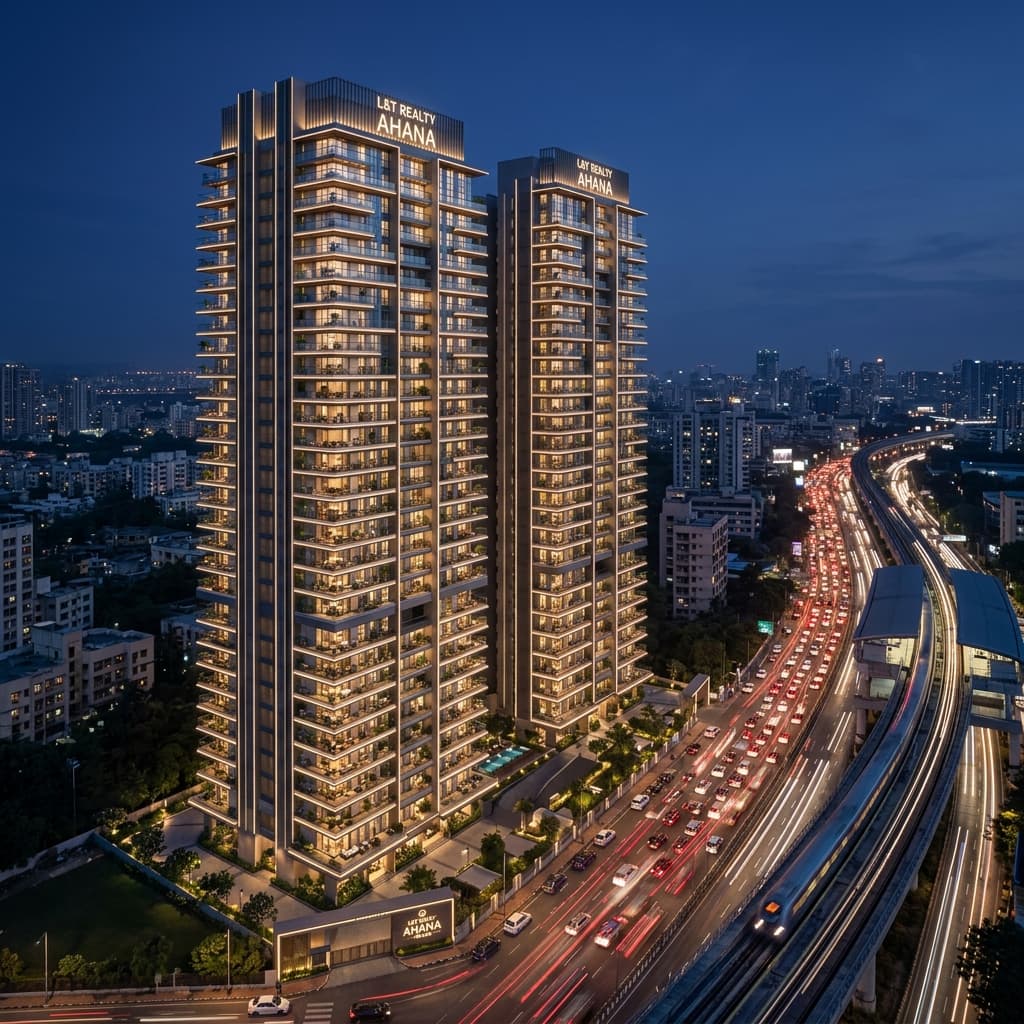
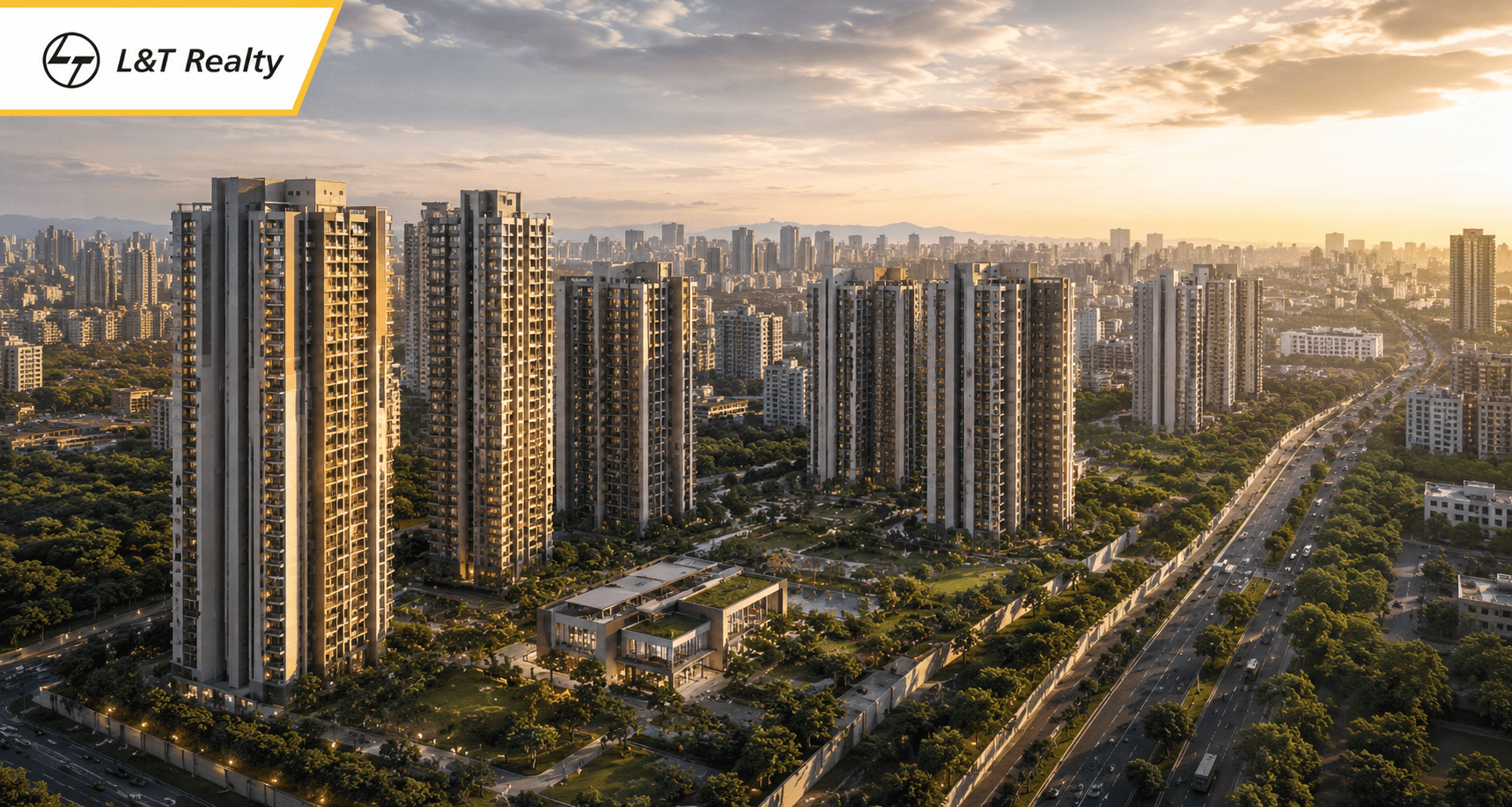
The most significant piece of pre-launch project attention near the Kurar metro corridor relates to a reported upcoming development by L&T Realty in the Koknipada area of Malad East.
A very important note: This project has not been officially launched. RERA registration is not yet publicly available. Official details from L&T Realty—confirmed pricing, approved floor plans, registered possession dates—have not been formally disclosed. Everything below is based on information currently circulating in early-stage market sources and third-party listing aggregators. Buyers must treat all of it as preliminary and unverified, and must verify all information directly with L&T Realty once official project information becomes available.
According to information currently circulating in the market, the project is reported to be located in Koknipada, Malad East, off the Western Express Highway—within the Dindoshi metro catchment and within practical commuting distance of the Kurar station corridor.
Several early project listings suggest two residential towers of approximately G+60 floors each, on a land parcel of approximately 2 acres. Initial reports indicate 2 BHK, 3 BHK, and 4 BHK configurations, with carpet areas spanning from approximately 750 sq ft to 2,100 sq ft. Indicative starting prices mentioned in aggregator sources begin at approximately ₹2.80 Crore for 2 BHK. Official details are still awaited.
The reason this project generates attention beyond its reported specifications is the developer name. L&T Realty's project portfolio and developer profile reflect a track record of premium positioning backed by the engineering heritage of the Larsen & Toubro Group. When a developer of that standing is reported to be entering a micro-market, the conversation changes—not just about the project itself, but about the location.
No financial commitment should be made to any party for this or any unregistered project. Verify RERA registration independently on maharera.mahaonline.gov.in before proceeding.
Could Malad East Become One of Mumbai's Most Watched Residential Markets?
The ingredients are all present.
Infrastructure that has already arrived—Metro Line 7 is operational, not promised. The WEH is established. The suburb's road connectivity works.
A demographic base that has already formed—professionals working in the Andheri-Goregaon commercial belt who live in Malad East and have been waiting for premium residential supply in their own suburb.
Developer interest beginning to crystallise—with reported premium developer activity representing the beginning of a supply cycle that typically takes 5–8 years to fully play out.
Pricing that still reflects a discount to fundamentals—not because the location is inferior to comparable Goregaon East or Andheri East product, but because the premium supply hasn't yet arrived in volume to reprice the area.
What Malad East doesn't yet have is the track record of premium delivery—completed projects, established communities, visible evidence that the suburb's premium ambition has been fulfilled. That track record takes years to build. Buyers who wait for it will pay the post-delivery price.
The historical parallel that recurs most often in these conversations isn't Ghatkopar—which was faster and sharper. It's Mulund, Thane's central belt, Borivali East—suburbs that moved from mid-market to premium over a decade-long arc driven by improving infrastructure, professional demographic growth, and the gradual arrival of branded developer supply.
Malad East appears to be at the beginning of that arc, not the end. The Kurar metro is the infrastructure event that marks the transition—from a suburb where buyers came because it was affordable, to one where buyers come because it's genuinely desirable.
Buyers who understand infrastructure-driven real estate cycles will recognise where Malad East sits in that cycle. The rest will recognise it in hindsight.
Published by TSS Global | tssglobal.in | Mumbai & Pune Real Estate Advisory | June 2026
Frequently Asked Questions
Kurar is a station on Mumbai Metro Line 7—the Red Line—running from Dahisar East to Andheri East. It serves Malad East residents as a metro commute alternative to the Western Railway, connecting toward Andheri's metro interchange and the broader network.
Research across Mumbai's completed metro corridors shows properties within approximately 500 metres of a station command 15–25% premiums over comparable non-metro-proximate properties. The premium builds over 5–8 years post-operationalisation. Around Kurar and Dindoshi in Malad East, this repricing is still underway.
Malad East has strong investment fundamentals: Metro Line 7 connectivity, WEH access, proximity to the Andheri-Goregaon commercial belt, airport accessibility at approximately 12 minutes, and pricing still below comparable established suburbs. Investors with a 5–7 year horizon are actively tracking the area.
Malad West is more developed with limited remaining development land. Malad East has active redevelopment potential, the Kurar-Dindoshi metro corridor, and WEH access. For buyers prioritising appreciation potential, Malad East currently offers more runway.
Metro Line 7 provides a less crowded, air-conditioned alternative to the Western Railway for Malad East residents commuting toward Andheri. Predictable travel time and connection to Line 1 at Andheri make it a genuine daily-life improvement over road and railway alternatives.
According to information currently circulating in the market, L&T Realty is reported to be developing a premium residential project in Koknipada, Malad East. The project has not been officially launched and RERA registration is not yet available. Monitor L&T Realty's official website and maharera.mahaonline.gov.in for confirmed details.
Rental demand in Malad East is driven by professionals working in the Andheri-Goregaon corridor. Premium 2 BHK units in metro-proximate gated communities rent in the ₹35,000–₹55,000 range depending on furnishing, floor, and proximity to the metro station.
Walk the route yourself during a site visit from the project entrance to the Kurar station entrance. Measure the time on foot. Assess pedestrian infrastructure—footpath quality, road crossings, shelter. A 500-metre radius on Google Maps doesn't capture real-world walkability. The walk does.
New-launch premium projects in Malad East are positioned from approximately ₹2.5 Crore for 2 BHK configurations, with 3 BHK and 4 BHK ranging progressively higher. Existing resale stock in older buildings is significantly lower.
Yes. NRIs can purchase residential property in India under FEMA guidelines. Mumbai's residential market—including premium Malad East developments—is consistently one of the top NRI investment destinations due to rental demand, long-term capital appreciation, and professional building management in quality projects.
Beyond Metro Line 7, Malad East benefits from the Western Express Highway, MCGM's ongoing infrastructure investment in northern suburbs, proximity to CSMIA airport, and the Inorbit Mall retail corridor. The cumulative infrastructure picture in 2026 is substantially better than 2016.
Verify RERA registration on maharera.mahaonline.gov.in. Understand carpet area versus super built-up distinction. Calculate all-in costs—stamp duty (4–5%), registration (1%), GST on under-construction property (5%), and monthly maintenance. Have the sale agreement reviewed by a property lawyer before signing.
Metro Line 7 travel time from Kurar toward DN Nagar interchange is approximately 8–12 minutes. From Andheri East, connections to Metro Line 1 provide onward access to Ghatkopar and the central suburbs. Total commute times to Andheri commercial destinations from Kurar are substantially lower than equivalent road commutes in peak traffic.
Redevelopment replaces older residential buildings with new construction. In Malad East, redevelopment of older housing societies creates premium supply in established residential locations, raises the built environment quality standard, and supports price appreciation in the surrounding area.
Both are on Metro Line 7, separated by one stop. The choice depends on the specific project, its walkability to the relevant station, and pricing. Physically verify walking distance and commute from any project you're seriously considering before making a decision based on station name alone.